
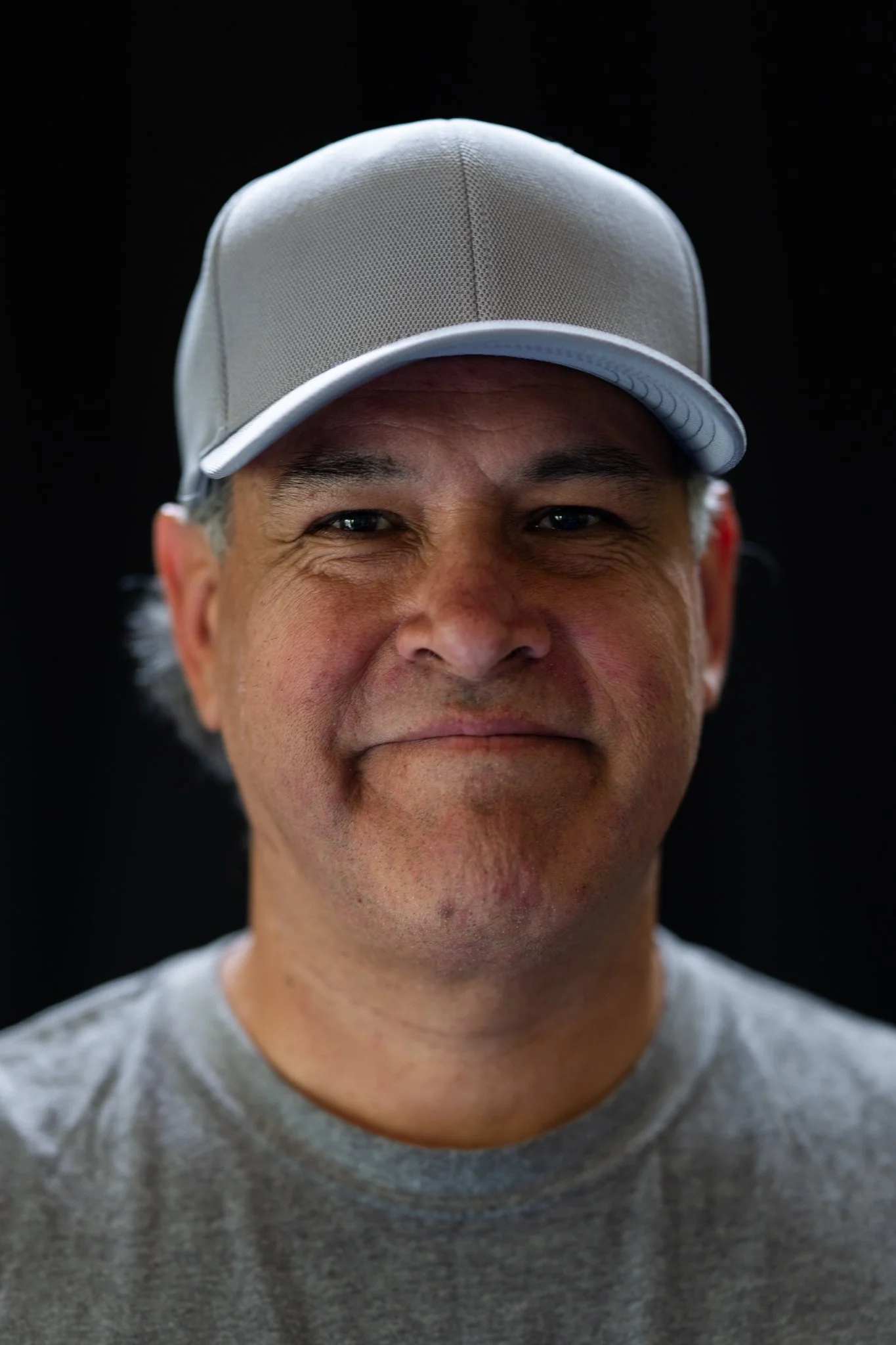
November 2026
FEATURED INTERVIEW
Robin Mercer
Documentary Photographer • British Columbia
Participant, The Globe Photo Academy Training and Mentorship Program
The Globe and Mail Foundation
How did you hear about The Globe and Mail Foundation photojournalism mentorship program?
I knew I wanted to get into documentary photography. Being more advanced in life—I’m in my forties, already went to university, and have a wife, four kids, and a cat—I was looking for a career change. I wanted to find something local, and the first hit online was the Globe Foundation Documentary Photo Academy. I reviewed the deadline, completed the 300-word write-up, submitted my portfolio, and was accepted into the program.
When did you know you wanted to be a photojournalist?
I’ve always wanted to be a photojournalist, even though my degrees are in mathematics and education, which led me into teaching. I’ve always loved photography, fine art books, and long-form documentaries. In my early twenties, I never thought about making a living from it, but I bought a Canon camera and would shoot in my spare time. I even had my own darkroom in the basement.
I’m a fairly solitary individual, and I’ve always predominantly liked to shoot black and white photos. It’s easier to shoot, and I'm drawn to moody, evening, and nighttime shots of streets, candid moments, and people.
Can you describe one or two documentary projects or stories that you've worked on in the past year?
I started off focusing on the housing situation in British Columbia, where a lot of people are currently unhoused due to addiction and economic factors. My wife and I have a friend who works with mental health and addiction issues in our community, so I wanted to document some of the people they support.
My father also struggles with mental health and addiction. Nobody chooses that path, and I wanted to show the human side of their stories.
The mentorship program gave me the time and resources to explore this deeply. My mentor (documentary photographer Pat Kane) and I eventually narrowed the project down to my father's story, focusing on mental health, addiction, trauma, and intergenerational trauma.
When I was younger, I thought these issues were made up, but I’ve come to realize that is not the case. This trauma has been passed down from my grandfather, to my father, and now to me.
Ultimately, the project evolved to focus on my father. In a way, the project is about finding my way home and reconnecting with my father and his identity. It is also an Indigenous story.
My dad is Tahltan, a part of the Haida and Anishinaabe nations in northern BC. My mom is Plains Cree from the Cowessess First Nation in southern Saskatchewan.
I grew up without a strong sense of culture because my mom was adopted. I want my children to connect with their heritage and reignite that sense of Indigenous identity. I think there are many people out there like me, and I hope this project shows them a way to reconnect and offers some hope.
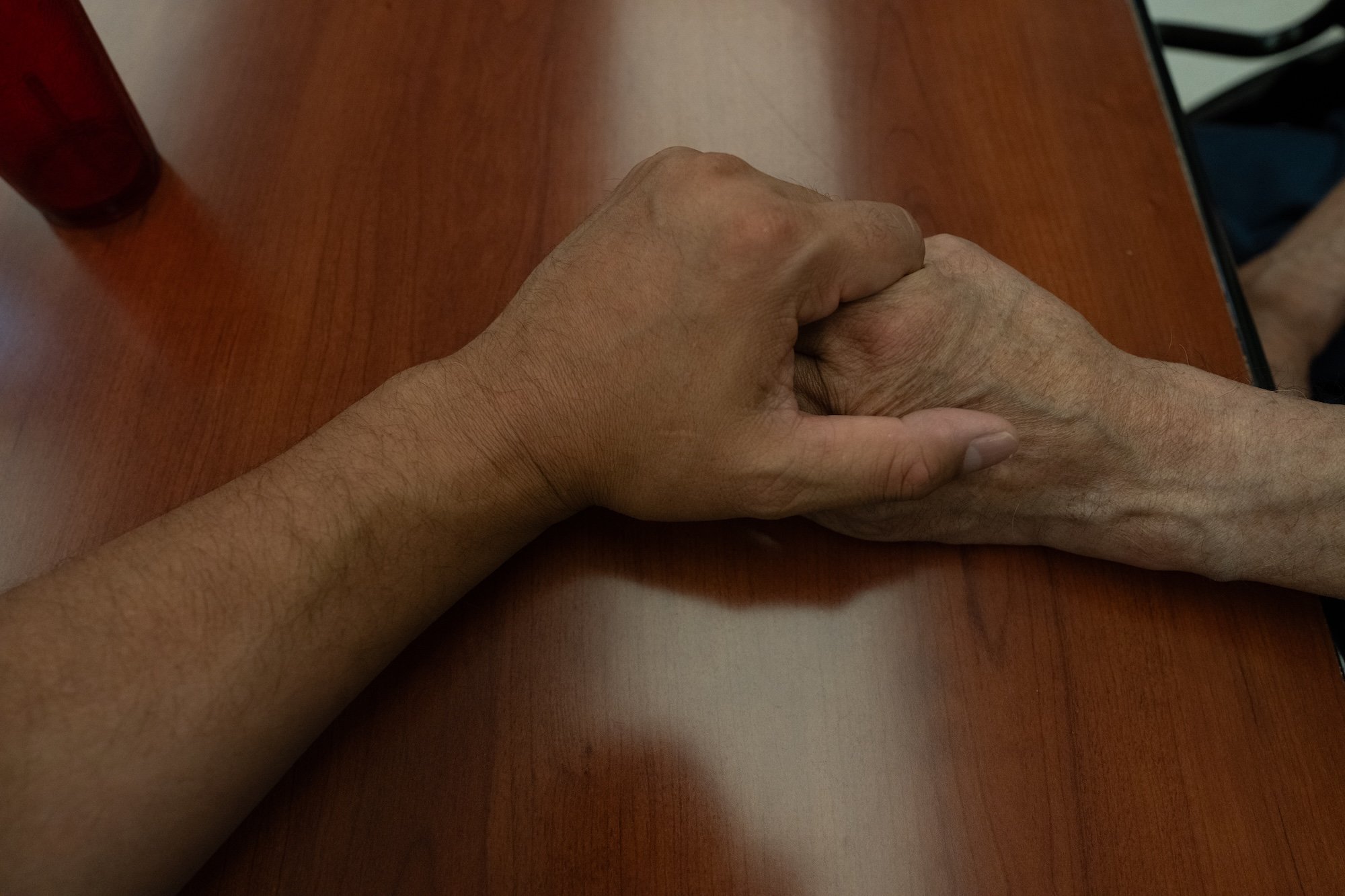
Photo from Robin’s project, “My Father’s Son”. “My Father and I held hands last night. He’s in full time care in Smithers.”
How was your experience in the mentorship program?
The program was incredible and highly informative. It’s lead by Chris Donovan, who was amazing—he is one of those teachers who possesses an exceptionally deep knowledge of his subject. It was also wonderful to connect with peers who were in the same position as me, meeting people who were just starting out and not yet fully established in the field.
One of the highlights for me was Chris's office hours. We would log on and chat about photography and what informed my practice; it truly felt like I had someone to guide me.
By the time the program wrapped up, I was sad and wanted it to keep going, but it has left a lasting impression on me.
Did the program teach you skills that you can use in your professional practice?
Yes, absolutely, and in several different ways.
When I studied education, we took a class on the history and philosophy of education. I thought it was useless at the time, but it eventually came to inform my teaching practice. Similarly, learning the history of photography during this program was incredibly valuable because it shows you what came before.
The program also taught me practical skills that I previously didn't understand, such as how to get your work out there through exhibits or publications. Seeing how some people even hosted art shows in their basements was eye-opening. We covered very practical necessities like writing grants and proposals, which is something I need to start working on.
Additionally, the networking opportunities were fantastic. We heard from a lot of guest speakers and got to learn from their perspectives—including a session on securing funding and another with an editor. The entire experience provided highly practical, hands-on information.