
The Globe and Mail Foundation Brings Canada’s Documentary Photography Community into Focus with Globe Photojournalism Summit
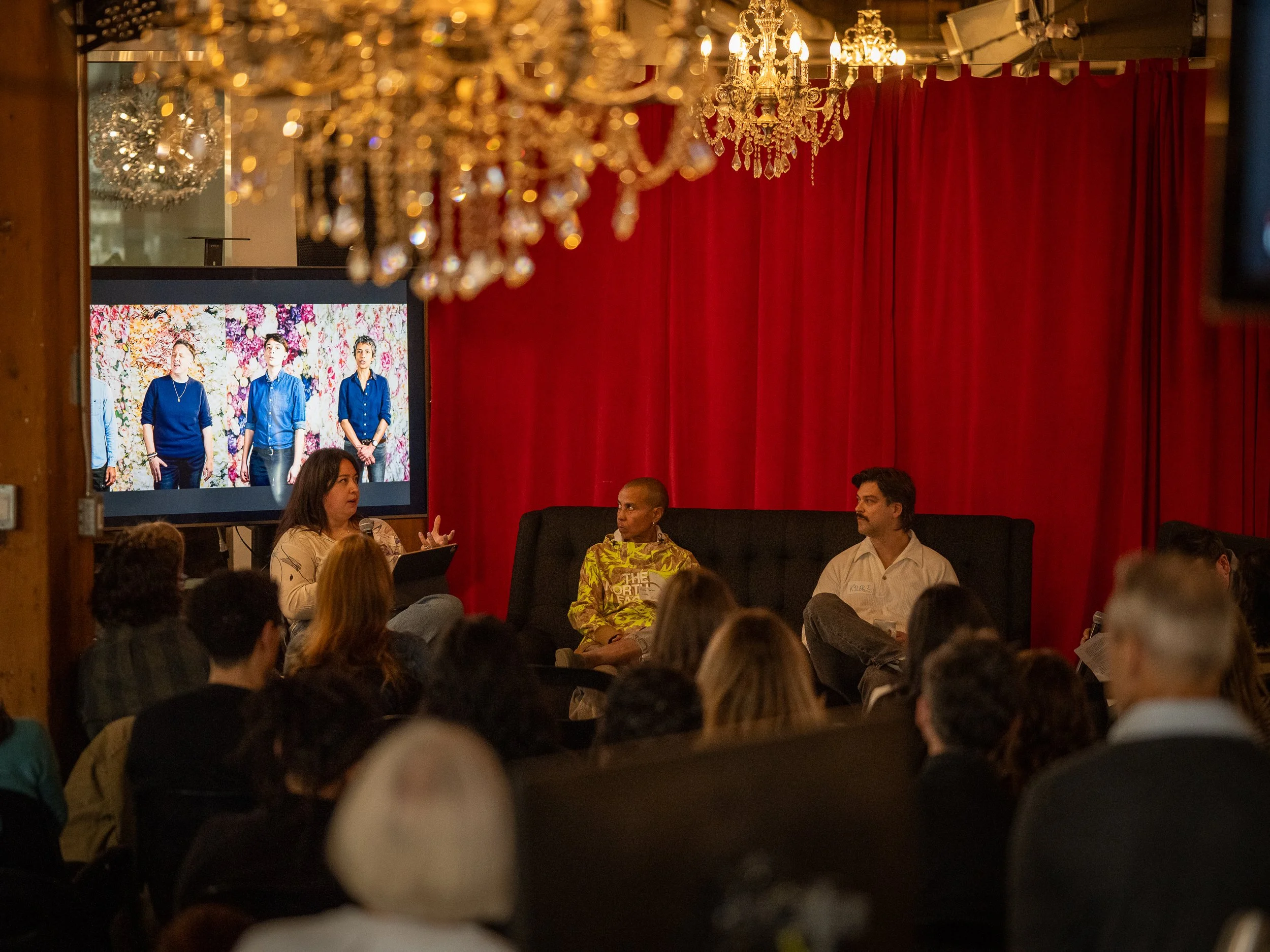
In a panel moderated by Pat Kane, Alex Jacobs-Blum, Michèle Pearson Clarke, and Kyler Zeleny discuss the challenges of documenting your community; a risky endeavour when it involves being subjectively critical, a stance which may impair relationships and future access. Photo: Mike Hyttinen
Toronto, May 12, 2026—What does it feel like to be arrested as an accredited photojournalist reporting on a protest? Or to document the war-torn streets of a Ukrainian town under siege by Russian artillery? How to make ends meet as a freelance photographer when budgets at many media organizations are being squeezed? Or compete with the AI-manufactured images flooding the internet? Are there any AI tools now that photojournalists can ethically utilize in their professional practice?
These queries along with other practical and often profound questions were posed at the Foundation’s inaugural Globe Photojournalism Summit. Held at Toronto’s Centre for Social Innovation over the first weekend in May, the summit was attended by over 80 established and emerging photojournalists, visual storytellers, photo editors and other industry experts from across Canada, and beyond, with delegates from the US, and as far as Poland and Ukraine.
To be held annually to advance the practice of documentary photography, the summit was presented by The Globe and Mail Foundation to support Canada’s vibrant community of professional photojournalists, whose visual storytelling enriches our daily news, helping us better understand some of Canada, and the world’s, most complex stories.
The peer-to-peer photo industry event is critical at a time when photojournalism is starkly underserved as an area of reporting, and during an era when many media organizations are experiencing massive financial turbulence, which was reflected in discussions on and off stage at the summit.
“The Photo Summit is our way of helping to ensure continued excellence in journalism in Canada, through compelling visual storytelling,” said Laura Lavie, Executive Director of The Globe and Mail Foundation. “By bringing together and supporting this vital community of photographers, the hope is that the Canadian public will benefit from the sustained work of these highly-trained professional journalists. Their images illuminate and humanize the news we consume, and ultimately capture Canada’s history and identity.”
“It’s a challenging time to be a photojournalist in Canada. Many of the attendees are freelancers, navigating precarious career paths in order to remain working in the field. We hope the summit is a chance for them to learn and share best practices, and develop new connections to advance their career,” said Chris Donovan, Globe Photo Summit Director of Programming. “The summit’s mission is to strengthen professional bonds, encourage knowledge sharing and to facilitate discussions on meaningful subjects for Canada’s photojournalism community.”
The program featured professional development roundtables, presentations, panel discussions, portfolio reviews, and ample time for sharing stories and making new industry connections. It also included workshops ranging from tips on how to file taxes as a freelancer to best practices on safety while reporting.
The attendees included several acclaimed photojournalists—Louie Palu based in Washington D.C., Philip Cheung from the L.A. Times, Olga Ivashchenko, Globe freelancer based in Kyiv, whose travel was made possible by the Temerty Foundation and the Stawnichy Family — alongside rising talent, as well as a roster of photo editors from major media organizations, including The Toronto Star, Reuters, Canadian Press, and The Globe and Mail.
“The work of these photojournalists is vital, as is their professional commitment to informing the public about important issues. We want to support their craft and careers,” said Phillip Crawley, Chair of the Globe and Mail Foundation. “This summit is committed to building a positive future for Canadian photojournalism. We look forward to connecting with their images and stories in our national news for years to come.”
The Globe and Mail Foundation would like to thank: Dr. Anthony Feinstein, Artbooks, Canadian Journalism Forum on Violence and Trauma and Jane Hawkes, Centre for Social Innovation, Chris Donovan, City of Toronto, Collective Arts, The Sheelagh, Frank & Helen Creaghan Fund, Kathleen Davis, Louie Palu, Michelle Shephard, Mike Hyttinen, Randy Velocci, Rob Steiner, Ronit Novak, Temerty Foundation, the Globe and Mail photo desk, and countless others for making the summit a success for all.
The Program:
Yellowknife-based photographer Pat Kane opened the summit by leading a conversation with Alex Jacobs-Blum, Kyler Zeleny and Michèle Pearson Clarke on the challenges of documenting your community; a risky endeavour when it involves being subjectively critical, a stance which may impair relationships and future access.
TMU professor and researcher Angela Misri moderated a discussion on the impact of AI on photojournalism, with Matt Frehner, Liam Maloney and Ronit Novak. The panel agreed on the need for industry guidelines when it comes to using AI tools and debated on when the act of photo enhancement crosses the line to become alteration. One panelist presented the idea of using AI to sift through trauma-inducing images, to protect the mental health of news editors.
Investigative journalist Michelle Shephard moderated a panel around trauma and visual reporting, which included renowned professor of psychiatry and researcher Dr. Anthony Feinstein, award-winning photojournalist Ian Willms, and The Globe’s Marcus Yam. One takeaway: taking care of your mental wellbeing is critical to good reporting; make sure to take respite, nurture your relationships and cultivate an identity beyond your career. Willms emphasized taking the time to check-in emotionally with those being interviewed or photographed: don’t simply treat them as a source or subject matter.
The first day concluded with a powerful keynote from photojournalist Amber Bracken, who is currently suing the RCMP at the Supreme Court. In 2021, Bracken was arrested while reporting from northwestern British Columbia on a protest over construction of the Coastal GasLink pipeline on Wet’suwet’en territory. The accredited photojournalist was handcuffed, confined to a cell for days, and had her photographs seized: simply for doing her job.
The second full day included a safety workshop led by award-winning photographer Louie Palu; a session on the written word with University of Toronto’s Dalla Lana Public Health School Professor Rob Steiner; an assignment how-to workshop with The Globe and Mail’s Randy Velocci and Fred Lum; and a personal finance open house with Artbooks. Participants then took part in portfolio reviews and an “Ask Me Anything” conversation with editors who offered advice on a range of subjects, from crafting pitches to forging relationships with editorial staff.
Chloë Ellingson, an experienced photojournalist and visual editor at The Local led a conversation focused on sustainable long-term freelance careers. The challenges are myriad, as the media industry grapples with precarious business models and new technologies. Often required is a second job or even multiple careers: Jalani Morgan made the jump from photographer to photo editor through a sense of duty to his own community as a Black documentary photographer; Johnny Lam found a niche working with restaurant guides and taking commissions; Alexa Mazzarello created a larger, personal photography project with the potential of opening new revenue streams within the arts.
The summit concluded with a powerful visual account of the war in Ukraine, with acclaimed photojournalists Philip Cheung and Olga Ivashchenko sharing their respective work documenting the conflict; it was a powerful, emotional account, moderated by New Brunswick-based educator and photographer Chris Donovan. When Donovan asked about the role that beauty should play in war photography, Cheung responded concisely: “Beauty is a tool to get your point across.”
The value of visual storytelling as a distinct narrative artform in the news ecosystem was a thread throughout the summit. This community of documentary photographers was adamant that their work was still undervalued in the media, and should not simply be viewed as images that support text news stories. The consensus was that photojournalism as a resource and artform needed to be better represented and utilized in more sophisticated ways, by media organizations and consumers of news.
For more information contact:
Laura Lavie
Executive Director
The Globe and Mail Foundation